Second of a 2-part series
In a previous post focusing on Matthew Chapter 1, we noted that it is generally thought that Matthew’s Gospel is addressed primarily to convince a Jewish readership that Jesus is the Messiah. This would explain the presence of a genealogy as well as a narration of the circumstances surrounding the birth of Jesus.
Yet the remarkable aspect of Matthew’s account is that he includes details that on the surface would seem to discredit the claim that Jesus is the Messiah, at least the image of the Messiah that Israel largely held. We noted that the insertion of four foreign women of questionable repute into the genealogy coupled with the unique circumstances of Mary’s virgin conception raise the specter of scandal over the entire story. Yet, it is in the midst of this scandal that we observe the signs that Jesus is truly the Messiah, the Son of God.
Having established all of this, Matthew turns in Chapter 2 to the next set of scandals. Once again, foreigners are at the center of the story. One would expect that Matthew would collect testimonials from powerful Judean leaders as evidence of this Messianic claim about a baby born of a virgin. Yet, surprisingly, it is not the Jewish leaders, the Jewish scholars, the Jewish elite from the capital city of Jerusalem, or even the most devoted Jews who first recognize who Jesus is.
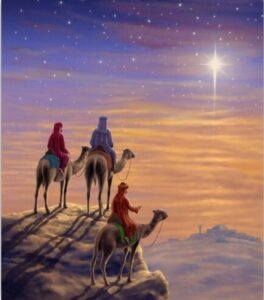
Instead, it is a group of people called “magi” or wise men “from the east” who came to Jerusalem, 2 asking, “Where is the child who has been born king of the Jews? Foreigners, not Israelites, are seeking to pay homage to “the king of the Jews” whom they only know about from their astrological studies coupled with a unique “star” observed from their own land far away.
Who were these magi, these wise men? Early church leaders reflecting on the Gospel of Matthew had many opinions, but most of them thought they were from Persia. Today, many Bible scholars think they were most likely from the area where Jews had been taken into exile centuries earlier by a series of foreign conquerors, the Assyrians, the Babylonians, the Medes, and the Persians. Each ancient civilization had highly literate advisors to their leaders, wise men who studied science, astronomy, philosophy, literature, and whatever source of wisdom was available.
The Jews who were taken into exile at the end the Old Testament period were generally the educated elite whom their conquerors wanted to make sure to dominate. Being among the most educated, they undoubtedly took their own scriptures along with them. They mingled with the educated elite of their captors and the Jewish scriptures were added to the scriptures that this group of wisemen collected from many cultures. Some scholars believe that we get a glimpse of this culture of the wise men in the Old Testament book of Daniel. Indeed, it may be that Daniel himself was considered a leading wise man during his days as an exile in the Persian royal court. Thus, the wisdom of the magi gets passed down from generation to generation, the ancient scriptures are collected and studied, and the skies are continually scanned for signs of significant events.
When these wise men in Matthew’s story become convinced that the signs in the heaven are pointing toward the birth of a “king of the Jews” they set out on a pilgrimage to the land of the Jews, hundreds of miles away. When they arrive, they logically come first to the capital city, Jerusalem, to seek this newborn king.
The scandal of Israel’s previous foreign captors seeking the “King of the Jews” is truly ironic. Here we see Israel’s former enemies seeking a king while the current royal court in Jerusalem is spooked by the thought that King Herod might have a challenger to his throne. King Herod fancied himself as the “King of the Jews” even though he himself was not a Jew but rather an Idumean.
When the wise men came to Jerusalem, they were put in contact with King Herod. Herod, in turn consulted “all the chief priests and scribes of the people” (Matthew 2:4) who would have been the equivalent of wise men among the Jews. Matthew’s wording tends to suggest that these two groups of wise men never interacted directly with each other but only through Herod. It is Herod who calls the chief priests and scribes together, and it is Herod who meets secretly with the magi to give them their instructions.
These Jewish wise men rightly identify where the Messiah was to be born—in Bethlehem of Judea, known as the city of David. They cite their sources, specifically, the Old Testament prophet, Micah. Yet it seems as though no one in Jerusalem went beyond the initial stir created by these distinguished foreign visitors. There seems to have been no attempt on the part of the Jewish leaders to find out why the wise men thought a king was born. They seemingly made no attempt to go to Bethlehem and investigate for themselves. Soon, the wise men slipped out of town and Jerusalem returned to its status quo.
For King Herod and his court, the message of the wise men was little more than another fearful nuisance threat to his rule. Herod lived routinely by fear; this wasn’t anything different. So, Herod doesn’t go himself: 8 Then he sent them [the wise men]to Bethlehem, saying, “Go and search diligently for the child, and when you have found him, bring me word so that I may also go and pay him homage.” (Matthew 2:8)
Even though Bethlehem was only about six miles away from Jerusalem, no one from the capital went looking for their Messiah. It was the pagan stargazers, the wise men, the descendants of those who had conquered Israel many years prior, who went, saw the star, and followed it to “the place where the child was.” This was a scandal in itself. The newborn king was not sought or recognized by his own people. Instead, it was the foreigners, the wisemen, who followed the star.
Yet, in that scandal is the true sign: This child will be the king of all nations. Matthew tells the story to make sure his readers know that the “king of the Jews” is recognized by the nations as the true king, a savior for all people everywhere and for all time. For the growing Christian church, this revelation of Christ to the nations is even today celebrated as the day of Epiphany, 12 days after Christmas, and in some cultures called “Three Kings Day.”
The gifts of the wisemen related by Matthew further recognize who this child really was.
- Gold was the currency of kings and royalty.
- Frankincense was used in the temple as a fragrant gift to God.
- And myrrh was used to embalm dead bodies and therefore foreshadows the suffering and death of Jesus.
Here, indeed, is the clue to what would become the biggest scandal of Christian faith. The king and Son of God was to die on a cross, a criminal’s death. The illusion of a military conqueror on behalf of just one ethnic group, the Jews, would be shattered in the ultimate scandal, a Savior who dies for all nations. The details, of course, come later in Matthew’s story.
Here in Chapter 2, Jesus is still a baby; yet, God intervenes even here as the scandal of Herod unfolds. Again, an “angel of the Lord” appeared to Joseph in a dream. “Get up, take the child and his mother, and flee to Egypt, and remain there until I tell you, for Herod is about to search for the child, to destroy him.” (Matthew 2:13b)
Imagine this shocking historical déjà vu. The history of Israel began with God bringing the people out of Egypt and here God is saying to go back there. Indeed, this is such a scandal that Matthew has to explain: This was to fulfill what had been spoken by the Lord through the prophet, “Out of Egypt I have called my son.” (Matthew 2:15b) Here we have a flashback to a previous “Joseph.” Just as the dreams of the Old Testament Joseph, son of Israel, led him into prison in Egypt, here, Mary’s husband, Joseph, is commanded to take the Jesus, Son of Israel, Son of David, back to Egypt as a refugee in order to save him from Herod’s wrath.
Matthew then reports how Herod’s massacre of the innocent children of Bethlehem is indeed another sign that Old Testament prophecies are being fulfilled. We know from other historical sources that Herod was so notably cruel that he killed his own wife and sons when he thought they threatened him. So, here he thinks nothing of killing a few peasant children around Bethlehem to keep his throne. Yet even this horror is used for God’s purposes.
When Herod dies, an angel appears to Joseph once again. The baby born in Bethlehem is indeed called out of Egypt. He grows up in an obscure village in Galilee called Nazareth, again, for Matthew, fulfilling a prophecy. Once again, the scandal becomes a sign. God is at work quite apart from Israel’s expectations of what Messiah would be and from where he would come.
Indeed, that is Matthew’s message to his own people. Jesus is a stumbling block, a scandal, when it comes to human expectations. Yet, Jesus is a sign in the prophetic tradition of Israel. God is the one who saves a lonely exile in Egypt, brings him out, and calls him “Son.” Matthew shows how Jesus fulfilled the prophetic plan as the Son of Abraham and the Son of David.
This is also far from the common notion of a pure and noble bloodline. That illusion was shattered long before Jesus arrived on the scene. The mothers of Jesus’s genealogy point out that foreign blood and sinful actions were always a part of Israel’s tradition.
This narrative begs the question even in our time: How do you define a Jew? How do you define a Christian? How can you even pretend to define God’s people through a pure bloodline? How can you claim sinless behavior is necessary for God to work? In the end, you arrive at Mary and Joseph. Here is no bloodline at all; it is purely the work of the Holy Spirit. There is no claim that Joseph is the biological father or that he was even perfect enough to be the adoptive father. Yet, it is the faithfulness of Joseph to accept Jesus as his earthly child that gives Jesus the heritage of King David.
Thus, Matthew goes even further than a scandalous genealogy to demonstrate that God’s Son and God’s people are always called out from the common sinful, oppressed, human condition in a pagan world. This is God at work in the messy events of human history for human salvation, calling only for a “Joseph” to faithfully follow God’s vision.
Scripture consistently portrays the scandal of God’s ways to human eyes. God’s ways do not depend on human bloodlines. God’s ways do not even depend on human notion of perfection. Rather, God’s ways are advanced by human faithfulness even in the midst of scandal.
Matthew is the Gospel writer most intent on proving to the Jewish people that Jesus is their Messiah. Yet, from the beginning he brings in the story of foreigners, including the first worshipers who give gifts fit for a king, a god, and a suffering servant. It is the wise men, descendants of Israel’s ancient conquerors in Persia, who become the first worshipers in Matthew’s story. Foreigners are woven throughout Jesus’s human genealogy. Foreigners are the first worshipers of the Messiah.
Yet, Matthew’s narrative of scandals and signs doesn’t end in the first two chapters. At a crucial moment in Matthew’s story of this movement of God, John the Baptist is in prison and having his doubts about his own Kingdom message. He sends his disciples to ask Jesus if he is really the Messiah.
4 Jesus answered them, “Go and tell John what you hear and see: 5 the blind receive their sight, the lame walk, those with a skin disease are cleansed, the deaf hear, the dead are raised, and the poor have good news brought to them. 6 And blessed is anyone who takes no offense (σκάνδαλον skandalon) at me.” (Matthew 11:24–6) There is that Greek word again: Blessed is anyone who is not scandalized by what God is doing through Jesus. Jesus himself affirms that the Old Testament prophets gave John and everyone else this picture of a Messiah as a true sign from God even though it looks like a scandal in the eyes of the world.
So, it is no surprise that Matthew’s Gospel ends as Jesus issues to his first disciples what has been called the “Great Commission.” Jesus’s words in Chapter 28 echo Matthew’s summary of the prophet and the angel in Chapter 1: 22 All this took place to fulfill what had been spoken by the Lord through the prophet: 23 “Look, the virgin shall become pregnant and give birth to a son, and they shall name him Emmanuel,” which means, “God is with us.” (Matthew 1:22-23).
Jesus’s final words to his disciples are: 19 Go therefore and make disciples of all nations, baptizing them in the name of the Father and of the Son and of the Holy Spirit 20 and teaching them to obey everything that I have commanded you. And remember, I am with you always, to the end of the age.” (Matthew 28:19-20) The great scandal has become the ultimate sign of the salvation of the world, a sign that Jesus’s disciples are to carry out by making more disciples until Jesus comes again. God with us: “I [Jesus, the Messiah, the Son of God] am with you always, to the end of the age.”